
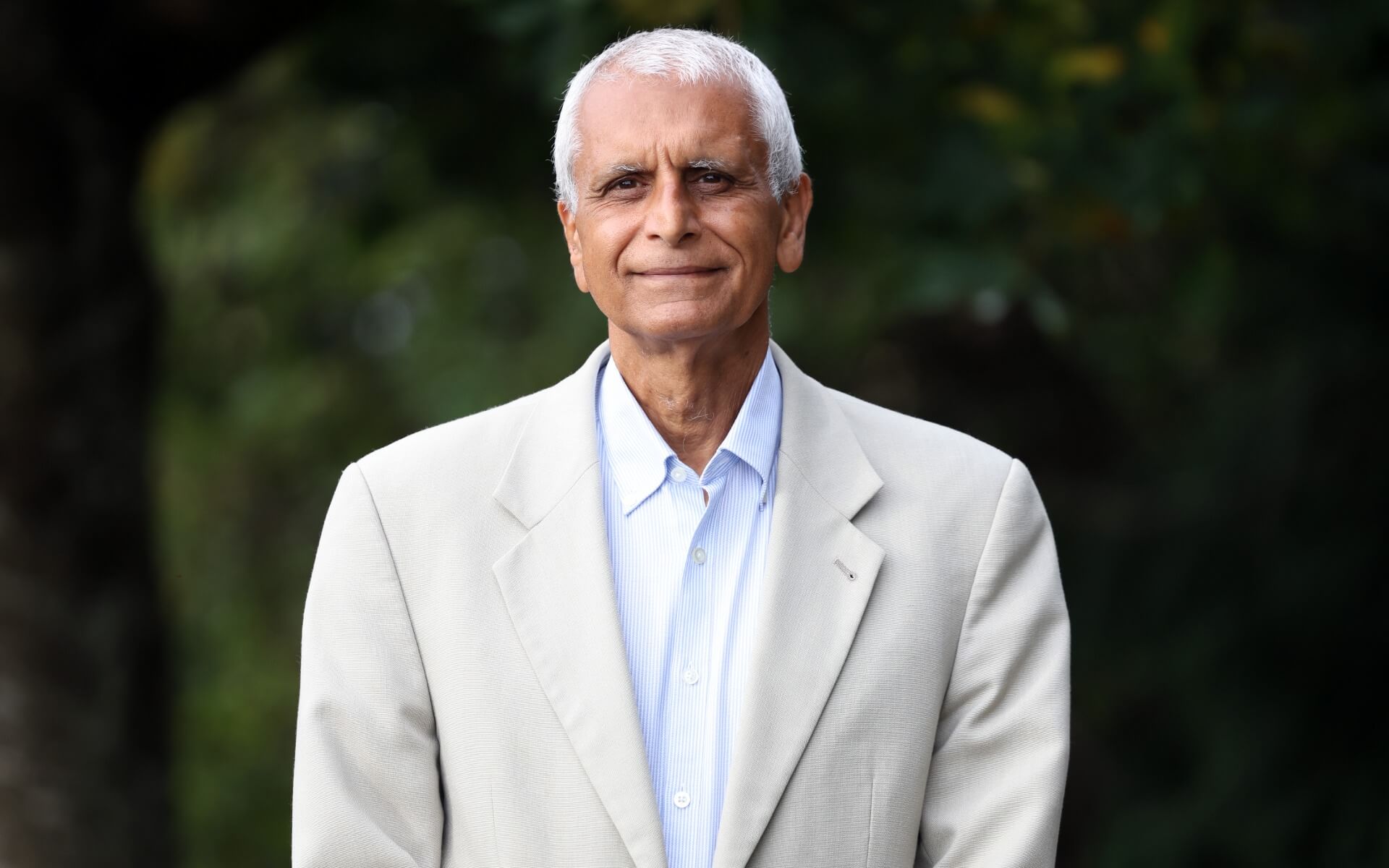
World-leading cardiac surgeon has shaped the face of lifesaving paediatric heart surgery and transplantation in the UK.
This year, Mr Hasan retired after 30 years as head of Paediatric Cardiac Surgery at the Freeman Hospital in Newcastle. In his time there, he has transformed treatment for children with serious heart defects. He estimates that he has performed around 400 transplants across the course of his career.
Over the past three decades, he has been an integral part of training many children’s heart surgeons in the UK as well as many internationally. There are thousands of people alive today thanks to his work, which will continue after his retirement through his influence on the next generation of children’s heart surgeons.
Mr Hasan played a major role in co-leading Newcastle’s ‘bridge to transplant’ programme, resulting in the Berlin Heart, a mechanical blood pump serving as a vital ‘bridge’, keeping infants and children alive while they wait for a suitable organ donor.
He also pioneered a new post-surgical sternum closure technique, known as the ‘bootlace closure’ that allows children to receive donor hearts which would ordinarily be too large for them. Without this technique, these children would die without a donor heart.
Mr Hasan built a reputation for never saying no to a surgery and taking on the cases of the sickest children in the country, even when the outcome looks bleak. Many have been rejected by other cardiac centres as too high-risk, meaning Mr Hasan and his team at the Freeman were their last chance to survive.
Former Pride of Britain Children of Courage Max Johnson and Cecilia Adamou are just two of the people who would not be alive today without him.
Asif says: “There have been big highs and big lows. My heart swells when I hear about a survivor doing so well, but I do remember all the traumatic cases where someone died. I’ve seen human misery up close, but also human resilience and courage.
“I’m quite an ordinary person, but I had so many extraordinary colleagues with me who gave their lives to the patients. Not just consultants, but nurses, incredible, incredible people. I have also worked in one of the most extraordinary institutions in the world, which is the NHS.
“One of my abiding resolves was that when I stopped work, nobody would miss me. It’s the art of becoming redundant. I wanted to train people so that they are not only competent, but better than me, and that’s what I have achieved. That is my proudest achievement.”
